A Homily for the 2nd Sunday Before Advent
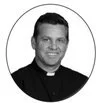
The Rev. Deacon Timothy Wilson
"O Lord, we beseech thee, absolve thy people from their offences; that through thy bountiful goodness we may all be delivered from the bands of those sins, which by our frailty we have committed."
The central message of today’s Collect reveals to us that the Christian life is a life of repentance, dependency upon grace, and perseverance in the faith.
This is an especially fitting theme as we approach the conclusion of the Church Year. Mother Church calls us to consider both the seriousness of our sin and the immeasurable goodness of God, who, through Jesus Christ, delivers His people and makes them whole.
And look at how we are taught to pray…we ask Him to deliver us from the very things that draw us into sin, and not just to clean us up from yesterday’s misdeeds. We ask for grace to walk in fidelity today, tomorrow, and the next day. It’s a continual journey of being made holy by the grace of God.
I would like to draw your attention this morning to two things that we’re praying for…first, that God would absolve us from our offences, and second, that He would deliver us from the bands of those sins. These are closely related, but not quite the same thing…because the first concerns forgiveness and the second concerns freedom…and we need both.
Have we given sufficient attention to asking Him to deliver us from besetting sins? It’s one thing to regret having sinned, and it’s quite another to desire, with the help of God’s grace, to be free from the sin itself.
You see, the Collect is not intent on pointing out a scrapbook collection of our isolated failures. Sin is insidious; much like being caught in a spider’s web, it has a binding quality. It establishes patterns, causes us to cultivate habits, warps/distorts our affections, and gradually, makes us less free to love God. The subtility of sin often begins with little indulgences, which may become a settled disposition. It may begin with an occasion of resentment, perhaps with one’s spouse, which settles into bitterness. Maybe it begins as moments of distrust in God to provide for us, just like the Exodus generation, becoming hardened hearts of unbelief.
In other words, we must not, dare not, underestimate the deceitfulness and power of sin, but neither must we underestimate the power of God’s grace.
The Collect asks God to deliver us “through thy bountiful goodness.” Our hope is in the goodness of God in Christ Jesus.
St. Paul tells the Colossians that the Gospel, which has come to them, is “bringing forth fruit” in their lives.
I think that expression is worth considering. Why? Because the Gospel brings forth fruit in those who receive it in faith. The Gospel is living and active. It produces something. It changes the heart, and in so doing, shapes the conduct of those who belong to Christ. Having received the Gospel, we are to walk in a manner consistent with the calling we have received.
St. Paul continues by praying that they might be "strengthened with all might, according to his glorious power, unto all patience and long-suffering with joyfulness." That’s a beautiful description of the Christian life.
God’s strength is not given to us only for extraordinary moments or dramatic acts of faith…we’re not all called to be a Moses or an Elijah, but for ordinary endurance of obedience. Patience when circumstances are difficult, Long-suffering when others disappoint us, faithfulness when obedience is costly. We’re called to joyfulness even when life doesn’t go our way or how we had it all planned out. These are the fruits of Grace.
And Paul concludes, "which hath made us meet to be partakers of the inheritance of the saints in light.
Now, turn to the Gospel appointed for today.
The woman has suffered for twelve years. Her affliction has been prolonged, debilitating, and isolating. The ruler’s daughter, by contrast, has died. One has suffered from a condition that has persisted for years; the other appears to have reached the finality of death. The woman comes to Jesus in faith, and He restores her. The father comes to Jesus in desperate hope, and Christ raises his daughter.
Dearly beloved, no condition is too deeply rooted, no affliction too prolonged, and no circumstance too desperate for the compassion of our Lord!
He restores more than the daughter’s physical health. He receives her with tenderness and gives her back a place of belonging.
How’s this significant to today’s Collect, Deacon, you may ask? Well, we have prayed that God would deliver us from the bands of those sins which, through our frailty, we have committed.
So, we must recognize that some sins are easily confessed, but not so easily abandoned. Some habits have been with us for years. Some temptations return with discouraging regularity. Some wounds and resentments seem just too deeply embedded.
Which brings us to another detail in the Gospel…When Jesus enters the ruler’s house, the people laugh Him to scorn when He says that the maid is sleeping. They see only death. But, my friends, how often do we, in essence, make the same mistake in our spiritual lives? We look at ourselves, or perhaps someone else, and conclude that little, if anything, can be done. We see the years of failure, the entrenched habits, the repeated disappointments, and the apparent lack of progress.
We may even begin to believe, with a sigh, “Well, things will never change.” But the Gospel directs our attention away from the apparent impossibility of our condition, and away from our failed resolutions and sincere intentions, and toward the sufficiency of Christ.
Christ is not limited by what we see…He takes the young girl by the hand, and takes our hand in our weakness, and restores what sin has damaged, and brings life where death had taken hold.
Beloved, no Christian need despair of Christ’s grace!
Now, I would draw our attention to a particular prayer on p. 588 in the Prayer Book (Family Morning Prayer). To the prayer entitled Dedication of soul and body to God’s service a Resolution to be growing in daily goodness. It contains this beautiful resolution…
"We here dedicate both our souls and our bodies to thee and thy service, in a sober, righteous, and godly life: in which resolution, do thou, O merciful God, confirm and strengthen us; that, as we grow in age, we may grow in grace, and in the knowledge of our Lord and Saviour Jesus Christ."
Now, the prayer that follows is especially significant.
"But, O God, who knowest the weakness and corruption of our nature, and the manifold temptations which we daily meet with; We humbly beseech thee to have compassion on our infirmities, and to give us the constant assistance of thy Holy Spirit; that we may be effectually restrained from sin, and incited to our duty."
This prayer well expresses the understanding of sanctification. We must make a resolution to serve God, yes, but we must never imagine that our resolution is sufficient to accomplish what we resolved to do.
The Prayer Book recognizes the dreaded reality of our fallen nature and acknowledges that we are indeed weak. Yet, despite what could be debilitating discouragement, it directs us to the constant assistance of the Holy Spirit.
It’s not enough to just avoid doing what is wrong and remove what is evil; we must be moved to do what is right and cultivate what is good.
Then comes a very sobering petition in the prayer… "And, above all, keep in our minds a lively remembrance of that great day, in which we must give a strict account of our thoughts, words, and actions to him whom thou hast appointed the Judge of quick and dead, thy Son Jesus Christ our Lord."
We are reminded that life is lived in the light of eternity.
There will be a day when we stand before Christ. Our thoughts, words, and actions will not be hidden from Him. The things that we’ve excused, the things we’ve neglected, the things we have cherished in secret, as well as those things we have done in love…All will be known to Him.
This is intended to awaken us to the seriousness of our calling. We belong to Christ. So, then, our lives are to be ordered toward Him. And because we know that one day we’ll stand before Him, we should desire, by His grace, to live faithfully while it is Today.
That’s why this prayer is such a wonderful companion to today’s Collect. Both teach us that we must ask God not only to forgive our sins but deliver us from them. Both recognize our weakness and direct us to the assistance of divine grace.
At the altar, we do not come claiming that we, in ourselves, have overcome our sins. Yet we come because He is the same Lord whose property is always to have mercy. Through these holy mysteries, God assures us of His favor and goodness. How? By incorporating us into the mystical Body of His Son, and making us heirs through hope of His everlasting Kingdom.
We are also reminded to ask that God would assist us with His grace so that we may continue in that holy fellowship and do the good works He has prepared for us to walk in. This is the rhythm of Christian discipleship…Repentance, Forgiveness, Nourishment, and Obedience.
And so, as we approach the end of another Church Year, perhaps we should take this opportunity to examine our lives.
Are there sins we have become accustomed to excusing? Are there resentments that we have allowed to linger and remain? Are there habits that we know are contrary to God’s will that we have not sought to overcome? Are there duties of love and charity that we have neglected?
We should not be afraid to bring these things before our Lord. The woman with the issue of blood came to Him in faith. The ruler came to Him in desperation. Neither were turned away. Let us come to Him with the same confidence in His Mercy.
Let us pray with confidence the words of today’s Collect.
"O Lord, we beseech thee, absolve thy people from their offences; that through thy bountiful goodness we may all be delivered from the bands of those sins, which by our frailty we have committed."
And may He, who has begun a good work in us. Continue to strengthen us by His Holy Spirit, that we may grow in grace, persevere in faith, and at the last be made partakers of the inheritance of the saints in light. Amen.